Most modern books on ceremonial magic — Western or otherwise — open with a chapter on symbolism, move quickly to a ritual, and assume you are ready. Draw the circle. Light the incense. Speak the words. The original Arabic grimoires do not work this way. Not even close. Before a single invocation is spoken, before the practitioner so much as lifts a pen to draw a talisman, the source manuscripts demand a sequence of preparatory steps so rigorous, so physically and spiritually demanding, that a modern reader encountering them for the first time will understand immediately why the vast majority of published “magic books” produce nothing at all.
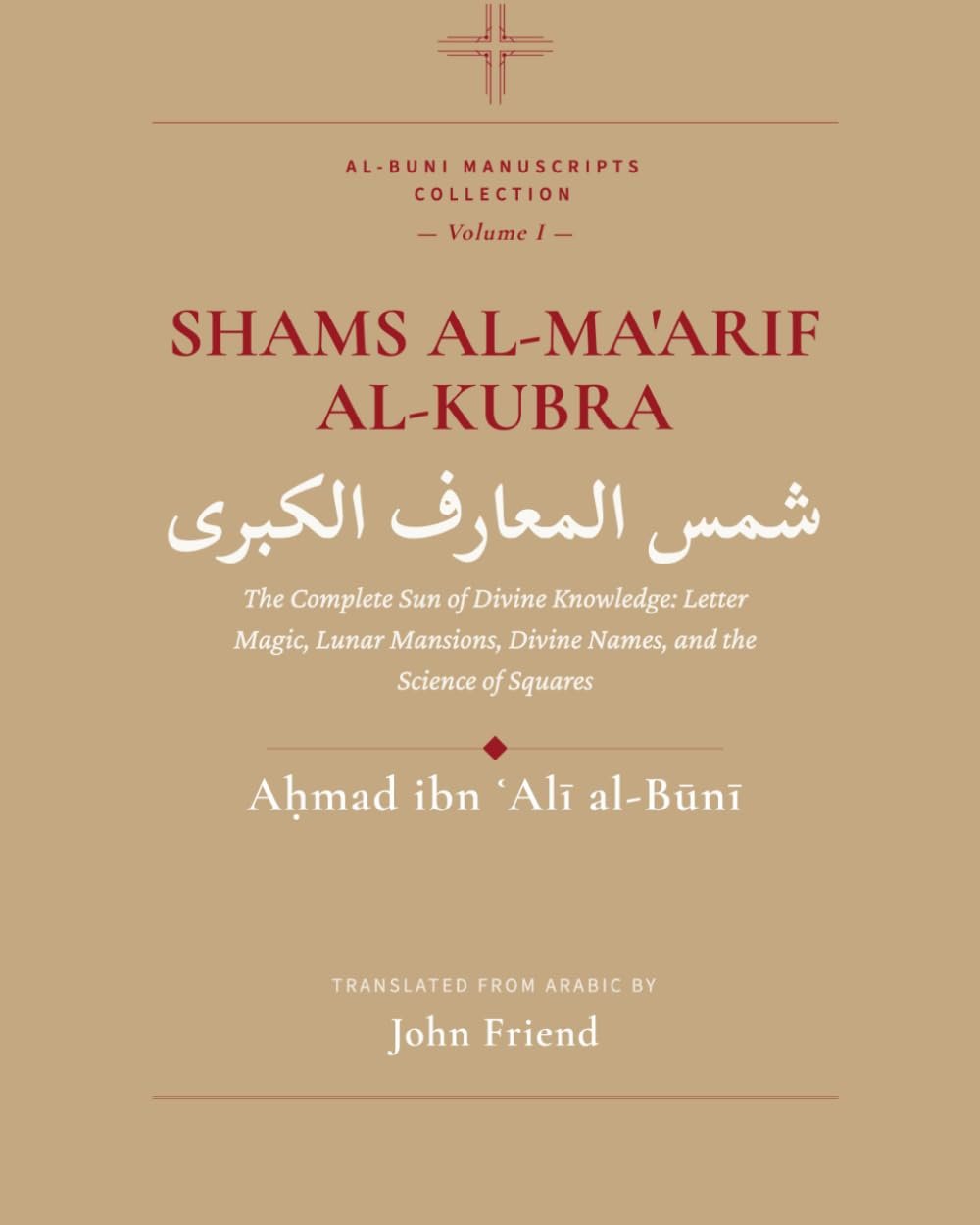
The five steps described below appear in virtually every operational grimoire in the Arabic tradition. They are documented in Ahmad al-Buni’s Shams al-Ma’arif, in the Ghayat al-Hakim (known in the West as the Picatrix), in Ibn al-Hajj al-Tilmsani’s Shams al-Anwar wa Kunuz al-Asrar al-Kubra, in the Solomonic Kitab al-Ajnas attributed to Asif ibn Barkhiya, in the anonymous al-Jawahir al-Lamma’a, and in dozens of other manuscripts that have never been translated into any European language. They are not optional. They are not suggestions. The texts treat them as the foundational technology without which the operative procedures simply will not function.
That is also why this essay is the place to start for anyone who hopes to find manifestation techniques in the old books, or to learn how to manifest something through Arabic magic. The manuscripts do promise results — love, protection, provision, the appearance of a spirit — but every one of those results is made conditional on the preparation below. To see what that looks like on real manuscript pages, skip ahead to what Arabic grimoire pages actually look like.
Here they are.
Step 1: The Dietary Purge and Fast (Riyadah)
Before any magical operation of consequence, the Arabic manuscripts require a sustained period of strict dietary discipline called riyadah — a word that literally means “training” or “exercise,” and which in this context refers to the systematic purification of the body through controlled fasting and abstinence.
The duration varies by source and by the severity of the operation being attempted. Minor workings may require three days. Major conjurations — the kind that involve direct contact with spiritual entities — prescribe fasts of seven, fourteen, twenty-one, or even forty consecutive days. Al-Buni in the Shams al-Ma’arif instructs the practitioner to begin the retreat by taking a laxative to purge the digestive tract entirely, so that the body enters the fast in a state of complete emptiness.
The dietary restrictions are absolute. No meat. No dairy. No eggs. No honey. Nothing “that has a soul or comes from a soul,” as the Shams al-Anwar phrases it. The practitioner breaks the daily fast — typically after sunset — with unleavened barley bread kneaded with olive oil, accompanied by dates and raisins. Nothing else. Garlic, onions, and leeks are specifically forbidden: the manuscripts are unanimous that spiritual entities “despise foul smells,” and the practitioner who reeks of onion will find the door closed before he even knocks.
The Ghayat al-Hakim frames this differently but arrives at the same place: the body must be rendered “subtle” — light, clean, emptied of gross matter — so that the spiritual faculties can operate without the drag of heavy digestion. This is not asceticism for its own sake. It is functional preparation, as deliberate as an athlete’s training camp before a competition.
You will not find this step in any modern Western book on ceremonial magic. Not in this detail. Not with this seriousness. The closest Western analogue is a vague instruction to “fast beforehand,” usually treated as optional.
Step 2: Ritual Purity and Continuous Ablution (Taharah)
The second requirement is comprehensive and unrelenting ritual purity — taharah. This operates on three levels simultaneously: body, clothing, and location.
The practitioner must perform a full ritual bath (ghusl) every single day of the retreat. This is not a shower. It is a specific washing procedure, performed in a prescribed order, with the intention (niyyah) of purification for the work ahead. Beyond the daily bath, the practitioner must maintain minor ablution (wudu’) at all times throughout the day and night — and must renew it immediately whenever it is broken. The Kitab al-Ajnas is emphatic on this point: a single lapse in wudu’ during the retreat can invalidate days of preparation.
Clothing must be pure white — or, in planetary workings, the color associated with the governing planet — and must be newly acquired through lawful means. “Lawful means” is not a throwaway phrase: the al-Jawahir al-Lamma’a specifies that garments obtained through theft, fraud, or any form of injustice carry a spiritual contamination that no amount of washing can remove. The practitioner’s clothing must be as clean in its provenance as in its fabric.
The location of the working — which we will discuss in the next step — must itself be purified. Floors swept and washed. Walls cleaned. The space fumigated with frankincense before the retreat begins and at regular intervals throughout.
Compare this with the typical instruction in a modern Western grimoire: “Bathe and put on clean clothes.” That sentence is doing the work of an entire preparatory discipline, and it does it badly.
Step 3: The Isolation Chamber (Khalwah)
The khalwah — the retreat chamber — is not simply a room. It is a controlled spiritual environment, and the manuscripts are extraordinarily specific about its requirements.
The room must be empty. No furniture beyond a mat or rug for sitting and prostration. No decorations. No images of living things. It must be clean, quiet, and as far as possible from human traffic and animal noise. The Shams al-Ma’arif warns specifically against performing workings in locations where dogs bark or roosters crow — these sounds disrupt the subtle conditions required for spiritual contact.
The room must be kept dark. Bright light weakens the conditions under which spiritual manifestation occurs. A single candle is permitted — preferably of beeswax, placed in a specific position relative to the practitioner — but no more. The Kunuz al-Asrar notes that even moonlight entering through a window can be excessive, and recommends covering all openings with dark cloth.
Inside the khalwah, the practitioner maintains complete silence. No speech except what is absolutely necessary for the operation itself — the recitations, the invocations, the prayers. No conversation. No idle words. The Shams al-Anwar instructs the practitioner to sit facing the qibla — the direction of Mecca — in the posture of prayer, and to maintain this orientation throughout the work. Sleep is forbidden unless the practitioner is overcome by exhaustion and physically cannot remain awake.
This last point is particularly significant, because multiple manuscripts note that spirits often make their first appearance during the practitioner’s sleep — not as dreams in the ordinary sense, but as visitations that occur when the exhausted practitioner finally succumbs. The Kitab al-Ajnas describes this as the spirits “testing the resolve” of the operator before deciding whether to appear openly during waking hours.
Step 4: Dismissal of the Ammar (Sarf al-Ammar)
This is the step that no Western book on magic mentions, because the Western tradition has no corresponding concept — and yet in the Arabic manuscripts it is treated as absolutely non-negotiable.
The ammar are the ambient jinn who inhabit every location. They are not the spirits being summoned. They are the resident entities of the place itself — of the room, the building, the land. Every location, according to the Arabic tradition, has its ammar, just as every house has its occupants. Before the practitioner can begin any invocation or conjuration, these resident jinn must be formally dismissed from the space. Failure to do so produces one of two outcomes, both catastrophic: either the ammar will block the summoned spirits from entering, rendering the entire operation inert, or they will be hostile to the intrusion into “their” territory and will attack the practitioner directly.
The Shams al-Anwar provides the method in detail. The practitioner burns a fumigation of frankincense mixed with coriander seeds, recites Surah al-Zalzalah (Quran 99) seven times, and each time upon reaching the word “ashtatan” repeats it three additional times. Then the practitioner speaks aloud: “I adjure you, O jinn and ammar of this place, to depart from here by the permission of God, and to leave this space clear for the work I am about to perform.” The al-Jawahir al-Lamma’a offers a variant method involving specific divine names written on paper and burned in the fumigation.
The concept is straightforward, and once you understand it, its absence from Western magical literature is baffling. You would not host an important meeting in a room already occupied by hostile strangers. You would clear the room first. That is what sarf al-ammar accomplishes.
The Ghayat al-Hakim addresses this obliquely when it discusses the “preparation of the place,” but the Arabic-language operational grimoires — the texts written by and for practitioners, rather than the philosophical compilations aimed at educated readers — are far more explicit. The reason is simple: the authors of these texts were writing for people who intended to actually perform the work, and they knew that skipping this step meant failure.
Step 5: The Protective Fortification (Tahsin)
Only after the body has been purified through fasting, the state of ritual purity maintained, the isolation chamber prepared, and the ambient jinn dismissed does the practitioner draw the protective circle — the tahsin, or fortification.
The circle exists in Western magic, of course. But the Arabic manuscripts treat it with a gravity and specificity that Western sources rarely match. The circle is not symbolic. It is not a “sacred space” in the vague, metaphorical sense that modern writers use that phrase. It is a literal spiritual barrier — a wall — and its integrity is the only thing standing between the practitioner and whatever responds to the invocation.
The circle is drawn physically on the ground, typically with charcoal, chalk, or a ritually prepared ink. Its dimensions, the names inscribed within and around it, and the specific configuration of divine names and Quranic verses vary by operation — the Shams al-Ma’arif provides multiple circle designs for different classes of working. The practitioner sits inside the circle and does not leave it under any circumstances until the operation is complete and the summoned entity has been formally dismissed.
The manuscripts are vivid about what happens if the circle is broken. The Kitab al-Ajnas warns that entities will test the circle: they will produce sounds outside it, create the illusion that the circle itself is on fire, cause the candle to extinguish, or project terrifying forms designed to make the practitioner bolt in fear. The Shams al-Anwar describes cases where spirits will take the form of a familiar person — a parent, a teacher — standing just outside the circle and calling to the practitioner to come out. The instruction is absolute: do not leave the circle. Whatever you see, whatever you hear, do not move.
Al-Buni writes that the circle’s power is not in the physical line itself but in the divine names that constitute it — names which, when correctly inscribed and activated through recitation, create a barrier that no spiritual entity can cross without the permission of God. Break the circle, and you break the names. Break the names, and you are unprotected.
Why Modern Books Skip All of This
The answer is not complicated. These five steps are demanding. They require weeks of physical discipline, genuine spiritual commitment, and a willingness to endure discomfort that modern readers — modern publishers — are not interested in hearing about. A book that opens with “Fast for forty days, maintain ablution at all times, sit in a dark room in silence, and do not sleep” is not going to sell as well as a book that opens with “Here is a powerful ritual you can do tonight.”
But the deeper reason is that most English-language books on ceremonial magic are not working from the original sources. They are working from translations of translations, from summaries of summaries, from a Western occult tradition that received Arabic magical knowledge in fragments — through the Latin Picatrix, through Agrippa, through the Solomonic grimoires that were themselves distant echoes of Arabic originals. Each stage of transmission stripped away the operational infrastructure and kept only the spectacular parts: the circles, the names, the conjurations. The preparatory discipline — the part that makes the spectacular parts actually work — was lost.
It was not lost in the Arabic tradition. The manuscripts preserve it in full.
Manifestation Techniques vs. the Manuscripts: How to Manifest, According to the Grimoires
Modern manifestation techniques promise results from intention, visualization, and affirmation. Anyone asking how to manifest a desire through the Arabic tradition will find the manuscripts answering a different question. In these texts, “manifestation” means something concrete — a spirit appearing, or an operation producing its effect — and both are made to depend on the preparation described above.
The Shams al-Ma’arif al-Kubra states the pattern in a few lines. For one letter of the alphabet it prescribes: “This letter’s retreat and discipline are twenty-eight days. The rule in the retreat is that you purify your outward and inward states” — then recite the invocation and its accompanying formula 111 times after every prayer. For another, the practitioner enters the retreat, fumigates three times, and recites the invocation after every prayer twenty-eight times; only then, the text says, “the servant will appear to you, his light like the sun.” Retreat, purity, incense, counted recitation: the same preparatory foundation, compressed into a single operation.
Al-Buni’s treatise on the divine names makes the same point about the name of giving itself. In its chapter on al-Wahhab, the Bestower, the reader is told to “undertake discipline, the path of abundant hunger, and persist in this remembrance” — see what al-Buni actually wrote about the 99 names of Allah. That is the manuscripts’ answer to how to manifest anything: not a technique to try tonight, but a discipline completed first.
What Arabic Grimoire Pages Actually Look Like
Anyone who opens real Arabic grimoire pages expecting a single chapter called “Preparation” will be surprised. On most Arabic occult manuscript pages, the preparatory rules are woven into individual operations as short, exact clauses — a number of days of retreat, a number of recitations after each prayer, a named incense. A typical line from the Shams al-Ma’arif reads: “The incense is coriander, frankincense, and camphor. The recitation is after every prayer twenty-eight times.”
The pages themselves are rarely prose alone. One Arabic grimoire manuscript, the Sihr Muluk al-Jann, preserves 85 images — talismanic seals, magic squares, numerical sequences, and the sigils of the jinn kings — while the Tumtum al-Hindi reproduces all fifteen of its talismanic figures. Seals, squares, and tables of names sit beside the instructions that govern when and how they may be written.
These are medieval occult manuscripts in the full sense — written in Arabic for readers who intended to perform the work. For a guide to every Arabic occult manuscript of this kind now available in English, see the complete guide to medieval Arabic occult manuscripts in English; for how those pages handle talismans specifically, see Arabic talisman making: awfaq and planetary hours.
Where to Read the Complete Instructions
These five preparatory steps — riyadah, taharah, khalwah, sarf al-ammar, and tahsin — appear with full operational detail in the source texts. The specific prayers recited during each phase. The exact fumigation recipes with quantities and timing. The day-by-day retreat protocols. The variant methods for different classes of operation. None of this has been available in English — until now.
The most complete presentation of this preparatory system available in English translation is Shams al-Anwar wa Kunuz al-Asrar al-Kubra (Suns of Lights and the Great Treasures of Secrets) by Ibn al-Hajj al-Tilmsani, written in 1327 CE and translated in full as Volume III of the John Friend Publishing series. Tilmsani, working a century after al-Buni in the same operative lineage, provides the most systematic and practitioner-oriented account of these preparatory steps that we have found in any Arabic manuscript. The full retreat protocol, the fasting regimen, the purification procedures, the sarf al-ammar method, the circle designs with their inscriptions — all of it is there, translated without abbreviation or editorial censorship.
For the Solomonic conjuration material, including the jinn-king hierarchies and planetary-hour protocols that build on this same preparatory foundation, see al-Jawahir al-Lamma’a: The Radiant Jewels for Summoning the Kings of Jinn (Volume V). For the tradition attributed to the court of Sulayman himself, see Kitab al-Ajnas (Volume IV).
The original texts are clear: the magic is in the preparation. Skip it, and you are reading words off a page. Complete it, and you are doing what the manuscripts were written for.
Frequently Asked Questions
What five steps does every Arabic grimoire require before magic?
The manuscripts require a fast and dietary purge (riyadah), continuous ritual purity (taharah), a dark, silent retreat chamber (khalwah), the dismissal of the resident jinn of the place (sarf al-ammar), and finally the protective circle (tahsin). Only after all five does the operation itself begin.
How do you manifest something according to the Arabic grimoires?
Not through the manifestation techniques of modern self-help. In the grimoires, a result — or the appearance of a spirit — follows a completed discipline: retreat, purity, fumigation, and recitation counted after every prayer. The Shams al-Ma’arif, for example, sets a twenty-eight-day retreat for one letter’s operation, and for another says the servant will appear only after the retreat and the prescribed recitations.
What do Arabic grimoire pages look like?
Most Arabic occult manuscript pages mix short, exact instructions — days of retreat, counts of recitation, named incenses — with talismanic seals, magic squares, and tables of names. The Sihr Muluk al-Jann alone preserves 85 images, reproduced in the John Friend Publishing edition directly from the source.
Which Arabic occult manuscripts describe these steps in English?
The most complete account is the Shams al-Anwar wa Kunuz al-Asrar al-Kubra of Ibn al-Hajj al-Tilmsani, translated in full as Volume III of the John Friend Publishing series. The Solomonic material appears in al-Jawahir al-Lamma’a (Volume V) and the Kitab al-Ajnas (Volume IV).
