There is a practice in the Arabic magical tradition that sits at the exact boundary between permissible and forbidden, between Quranic devotion and operative magic, between the religion of the mosque and the science of the manuscript. It is called the Seven Protective Veils, and it is one of the most widely practiced, most fiercely debated, and most genuinely feared techniques in the entire tradition attributed to al-Buni (d. 622 AH / ~1225 CE). Millions of people across the Arabic-speaking world believe these seven Quranic verses, recited in a specific sequence under specific conditions, create an impenetrable barrier between the reciter and every form of spiritual evil. Millions more believe that the practice is forbidden — that using Quranic verses as operative instruments, regardless of how sacred the source, crosses a line that should not be crossed.
The text does not care about the debate. It simply provides the method.
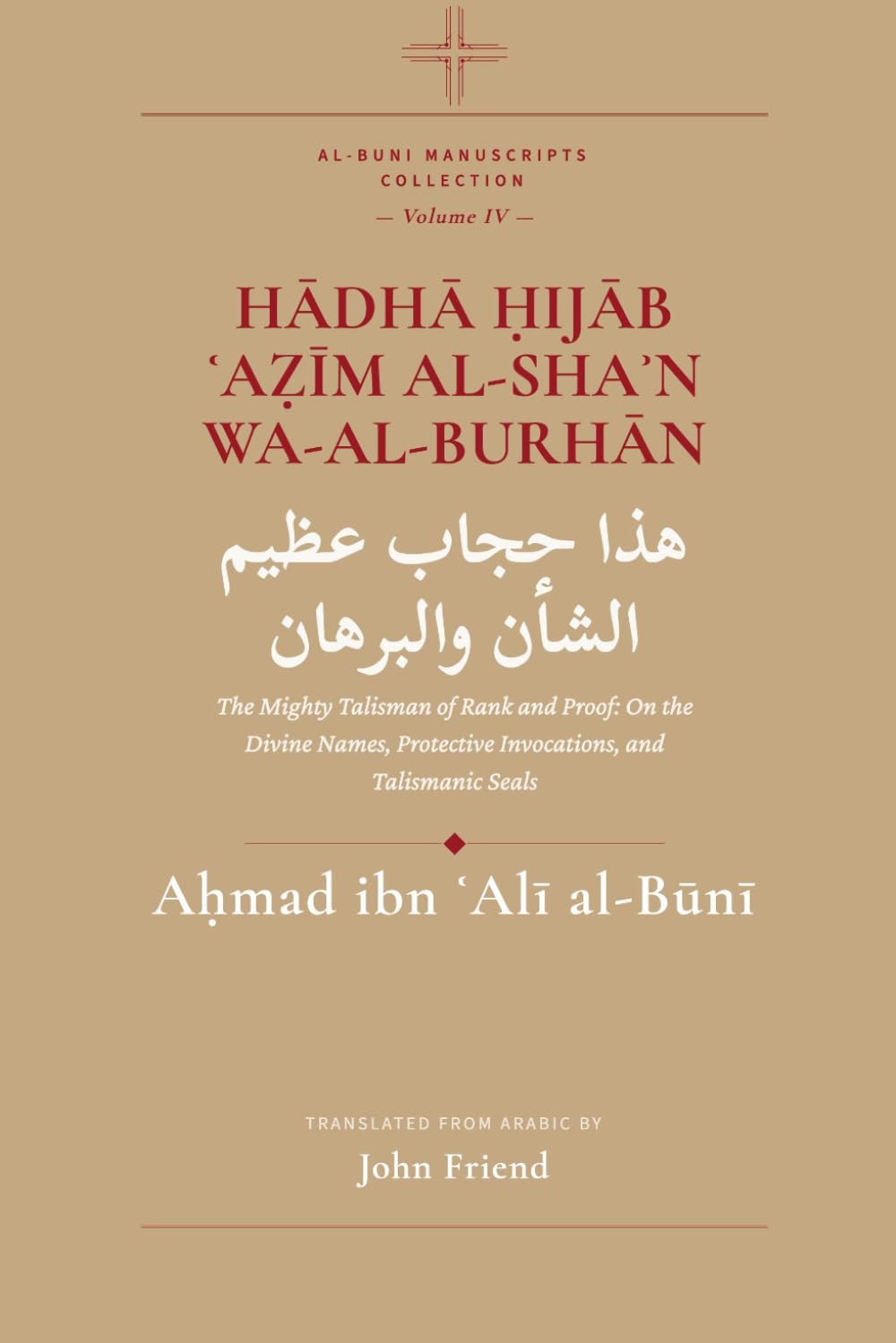
The Seven Protective Veils appear in Chapter 7 of Volume IV of the Al-Buni Manuscripts Collection — the Hijab ’Azim al-Sha’n wa-al-Burhan — beginning at page 26. They are not presented as a standalone practice. They are one layer within a comprehensive system of spiritual protection that includes divine name invocation, prophetic intercession, and talismanic construction. But they are the layer that people remember. The layer that circulates through oral tradition. The layer that practitioners whisper about when they speak of al-Buni’s most powerful defensive technique.
What the Seven Veils Actually Are
The Seven Protective Veils are specific Quranic verses — seven of them, selected and sequenced by al-Buni — that the tradition treats as forming a layered spiritual barrier. The concept is spatial and architectural: each veil is a wall, a curtain, a membrane of sacred text that interposes itself between the reciter and a specific category of harm. The seven veils together create a complete enclosure — a sphere of protection that covers above and below, before and behind, left and right, with no gap, no seam, no weakness through which hostile forces can penetrate.
The architectural metaphor is not accidental. In the Arabic magical tradition, protection is not a passive state but an active construction. It must be built, maintained, and renewed. Each veil is a structural element in a spiritual edifice, and the whole is stronger than any individual part. Remove one veil and the structure is weakened. Remove several and it collapses. Deploy all seven in the correct sequence with the correct preparation, and the tradition claims the result is absolute: nothing passes through.
For readers familiar with how the seven kings of the jinn are invoked in Arabic magic, the seven veils represent the defensive counterpart to that offensive practice. Where the seven kings are summoned — called forth, compelled, bound to service — the seven veils are erected: raised as barriers, deployed as shields, maintained as permanent structures of spiritual defense.
The Layer Principle: Why Seven?
The number seven is not arbitrary. It recurs throughout the Arabic magical tradition with a consistency that reflects deep cosmological conviction. Seven planets. Seven heavens. Seven earths. Seven kings of the jinn. Seven days of creation. The number carries a weight in Islamic cosmology that makes it the natural choice for a comprehensive protective system — it maps onto the sevenfold structure of reality itself.
Each veil in al-Buni’s system addresses a different register of threat:
- Physical harm — assault, accident, violence from human and non-human sources
- The evil eye — the envious gaze that the tradition treats as a measurable spiritual force
- Jinn interference — the attention and aggression of spiritual beings
- Sorcery — deliberate magical attack from human practitioners
- Fright and terror — the sudden overwhelming fear attributed to spiritual encounter
- Spiritual corruption — the gradual erosion of the soul’s integrity
- Divine displeasure — the withdrawal of spiritual protection that leaves a person vulnerable
Seven threats, seven veils. The system is complete by design.
The Context Within the Hijab Azim
The Seven Veils do not stand alone in Volume IV. They appear within a protective system that establishes their context and, the tradition claims, their effectiveness. Understanding where the veils sit within the Hijab Azim’s architecture reveals why the tradition considers them more powerful when deployed as part of the complete system.
The system begins with divine name invocation (p. 9) — establishing the practitioner’s relationship with the highest source of authority. It then moves through the Working of al-Fard (p. 13), which aligns the practitioner with divine unity. The Protective Encirclement through the Messenger of God (p. 21) adds prophetic intercession. Reliance upon God Against Harm (p. 25) establishes the inner preparation. Only then do the Seven Protective Veils appear (p. 26) — not as the first line of defense, but as a structural reinforcement laid over foundations already established.
After the veils, Supplication Through Prophet Muhammad (p. 28) seals what the veils erected. The Secret of Protective Names and the 6×6 Square (p. 38) provides the talismanic anchor — the material object that holds the entire protection in physical form. And the Supplication of Adam (p. 45) closes the system by connecting it to the primordial human cry for divine help.
The veils, in other words, are not the roof of the house. They are the walls. And the tradition insists that walls without a foundation and a roof are insufficient.
The Debate: Protection or Sorcery?
No practice in the Arabic magical tradition generates more theological controversy than the operative deployment of Quranic verses. The distinction that matters — the line that al-Buni’s tradition walks — is the boundary between spiritual science and sorcery.
On one side: the Quranic verses used in the Seven Veils are sacred text. Reciting them is an act of devotion. Seeking protection through God’s word is not merely permissible — it is encouraged. The Prophet Muhammad himself, according to authentic hadith, used Quranic recitation for protection. The Seven Veils, defenders argue, simply systematize what prophetic practice already established.
On the other side: the Seven Veils deploy these verses as operative instruments — not merely recited for general blessing but arranged in specific sequences for specific protective effects. The selection, the ordering, the conditions of recitation — these belong to the tradition of ’ilm al-huruf (letter science) and sihr halal (permissible magic), which many scholars consider a distinction without a difference. Magic is magic, they argue, regardless of whether its ingredients come from the Quran.
The debate is centuries old and shows no sign of resolution. What is not debated is the practice’s prevalence. The Seven Protective Veils, in various forms, are used across the Islamic world — from scholarly Sufi orders to village healers, from manuscript-literate practitioners to those who received the practice through purely oral transmission.
The Protective Encirclement
Chapter 5 of Volume IV — the Protective Encirclement through the Messenger of God — provides the framework within which the Seven Veils operate. The encirclement establishes a boundary — a sacred perimeter drawn around the practitioner through prophetic invocation. The veils then fill that perimeter with layered Quranic protection.
The concept of encirclement is geometric. The tradition imagines the practitioner at the center of a sphere, with the encirclement defining the sphere’s boundary and the veils constituting its substance. Think of it as scaffolding and walls: the encirclement provides the structure, and the veils provide the material. Together, they create a complete enclosed space within which the practitioner stands under the combined authority of prophetic intercession and Quranic protection.
The adjuration of al-Ahmar and his court operates within a parallel but inverted framework: where the practitioner establishes boundaries around themselves for defense in the Hijab Azim, the adjuration establishes boundaries around spiritual beings for the purpose of command. The Seven Veils keep things out. The adjuration keeps things contained.
The Supplication of Adam: Closing the Circle
The final chapter of Volume IV — the Supplication of Adam (p. 45) — deserves special attention in the context of the Seven Veils. This is not merely a prayer. It is a narrative connection to the origin of human vulnerability.
Adam, in the Islamic tradition, was the first human being to need protection. Expelled from paradise, stripped of the spiritual covering that the garden provided, Adam stood naked before a world of spiritual forces that he had not previously needed to fear. His supplication — the first human cry for divine help — established the prototype for every protective practice that followed.
By closing the Hijab Azim with Adam’s supplication, al-Buni connects the entire protective system to this primordial moment. The Seven Veils are not a medieval invention. They are, in the tradition’s understanding, a recovery of something that was lost — a reconstruction of the spiritual covering that Adam once wore and that humanity has been trying to reconstruct ever since.
The Text, Now Available
Volume IV of the Al-Buni Manuscripts Collection presents the complete Hijab Azim — including the Seven Protective Veils, the Protective Encirclement, and the Supplication of Adam — in English translation for the first time. All 49 pages. The complete system. Nothing redacted, nothing summarized, nothing left to conjecture.
For readers approaching al-Buni’s work for the first time, the Hijab Azim represents one of the most accessible entry points into the tradition — a focused, 49-page text with a single purpose and a clear architecture. For those already familiar with the broader corpus, it fills a gap that has existed in English-language access to al-Buni’s protective works for as long as the tradition has been studied in the West.
The translation is in paperback format with full IJMES romanization and diacritical marks for all Arabic terms.
Seven veils. Seven layers. One purpose: to place between you and every form of harm a barrier that, the tradition claims, nothing in creation can breach.