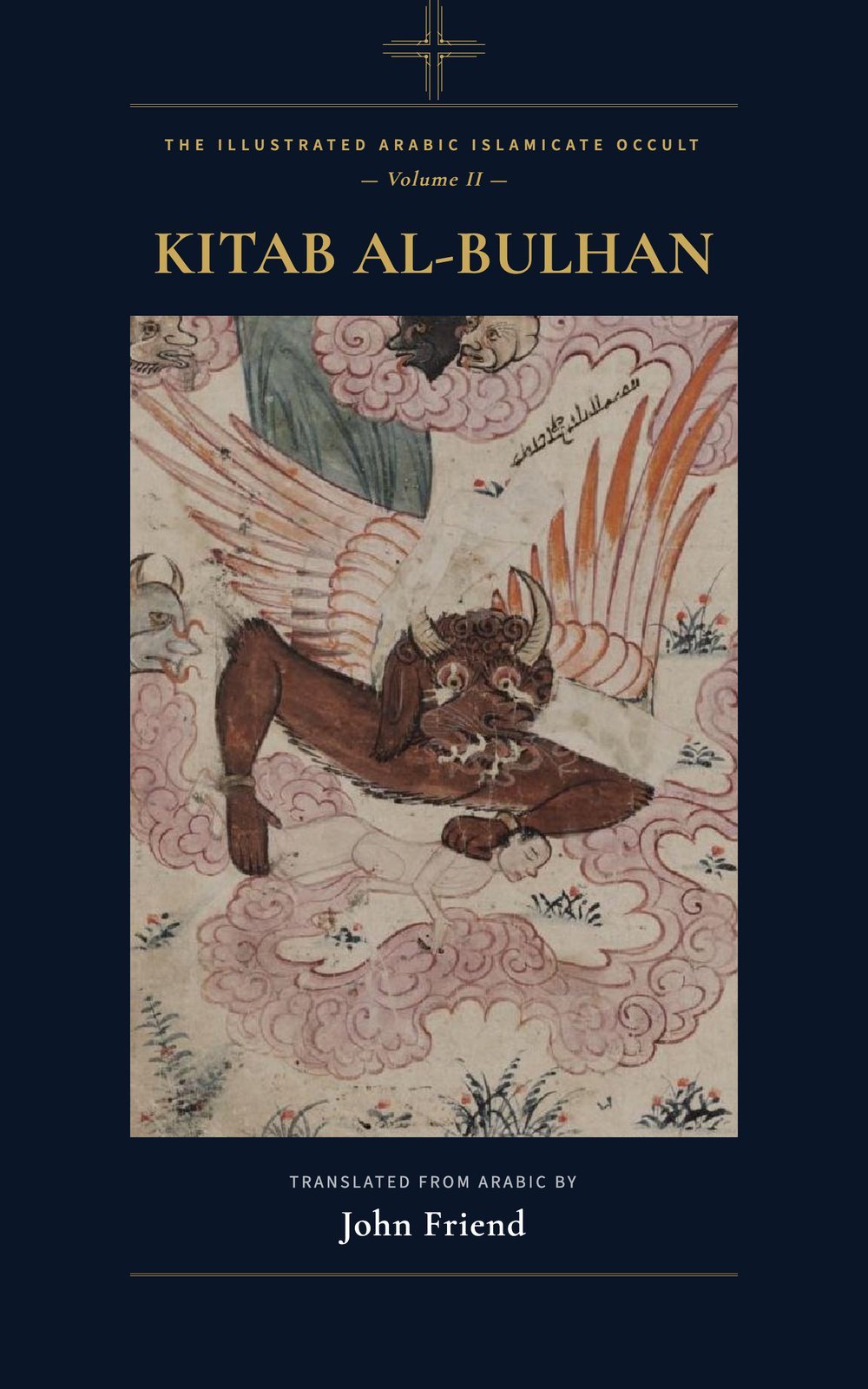
Volume II — The Illustrated Arabic Islamicate Occult
Kitab al-Bulhan The Book of Wonders
كتاب البلهان
The nativities, the kings of the jinn, the wonders of the lands, elections, lots and omens: the first complete English translation of Kitab al-Bulhan, The Book of Wonders, with every painting, diagram and table of the source reproduced in color, more than 190 of them as full-page plates.
Bookstores & libraries: order wholesale direct from the publisher
What’s Inside Kitab al-Bulhan
- Seven works in one volume, as the printed contents names them: the Book of Wonders itself; the figures of the constellations, for the sky and for the globe; The Pearls and the Rubies, a treatise on timekeeping; the Ja‘fari Lot; the omens of the prophets; the omens of the letters; and the signs paired with their planets, from Aries and Mars to Pisces and Jupiter.
- The nativities ascribed to Abu Ma‘shar, sign by sign and face by face, each sign with its painting.
- The kings of the jinn and the spirits that afflict mankind, each painted with his followers and his talismans: the Nightmare, the Black King, the Red King, Zawba‘a, Maymun al-Sahabi, Shamhurash and Iblis.
- Wonders of the lands and the seas, from the Lighthouse of Alexandria and the City of Brass to the Tree of Waq Waq and the barrier of Gog and Magog.
- Every painting, diagram and table of the source in color, more than 190 of them printed whole as full-page plates, and every table given again in English.
- A translator’s note, a conventions page, a table of contents with page numbers, and a glossary of 85 terms.
Leaves from the Book of Wonders
The First Complete English Translation of Kitab al-Bulhan (The Book of Wonders), with Every Painting, Diagram and Table Reproduced in Color
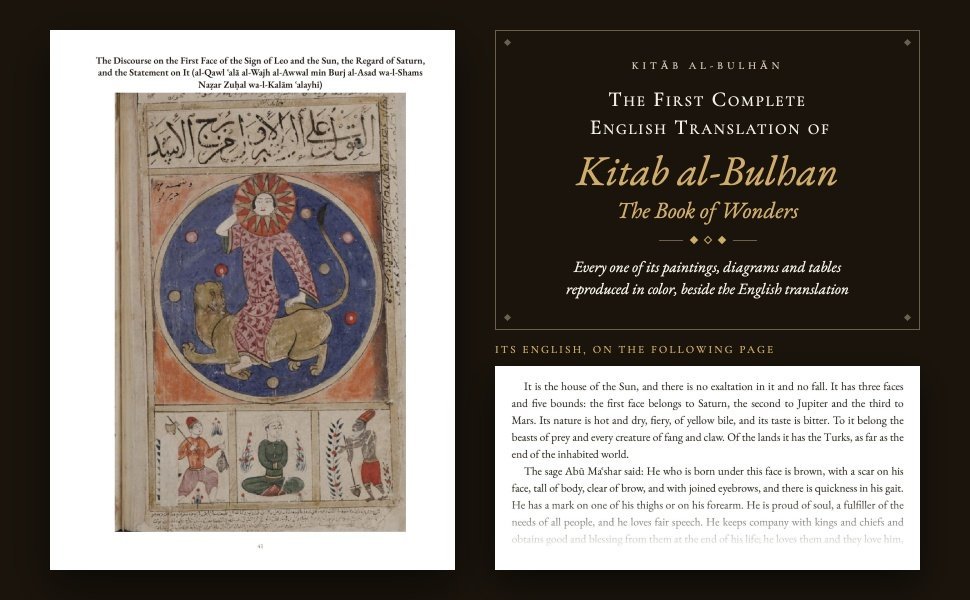
The Nativities: The Painting of the Sign and Its English, Side by Side
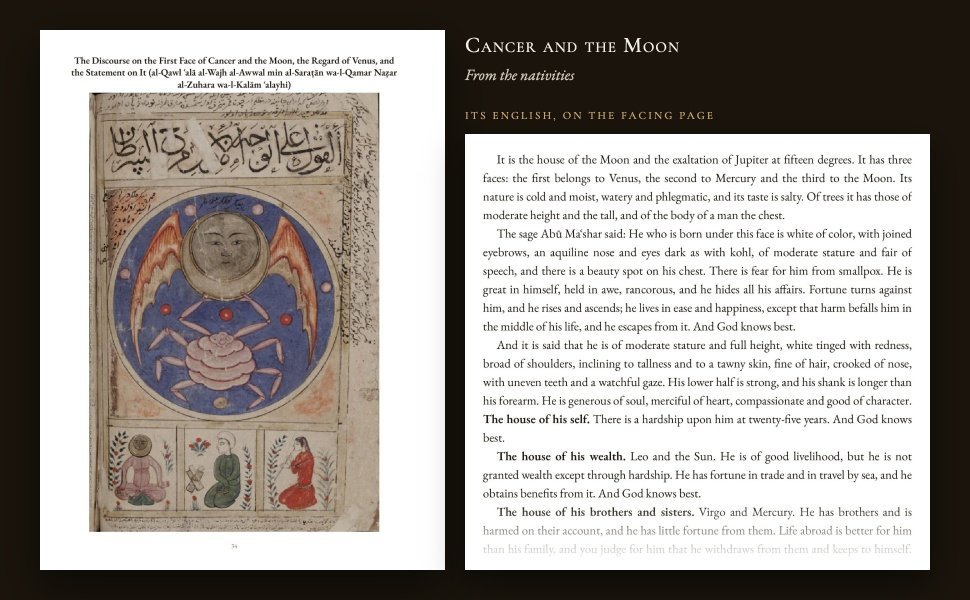
The nativities give, for each face of every sign, the character and fortune of whoever is born under it and the houses of his life, each sign with its painting of the sign, its governing planet and the lords over its faces. Shown here are the painting of Cancer and the Moon, printed whole, and the English of its first face from the facing page.
The Four Seasons: The Painted Leaf and Its English
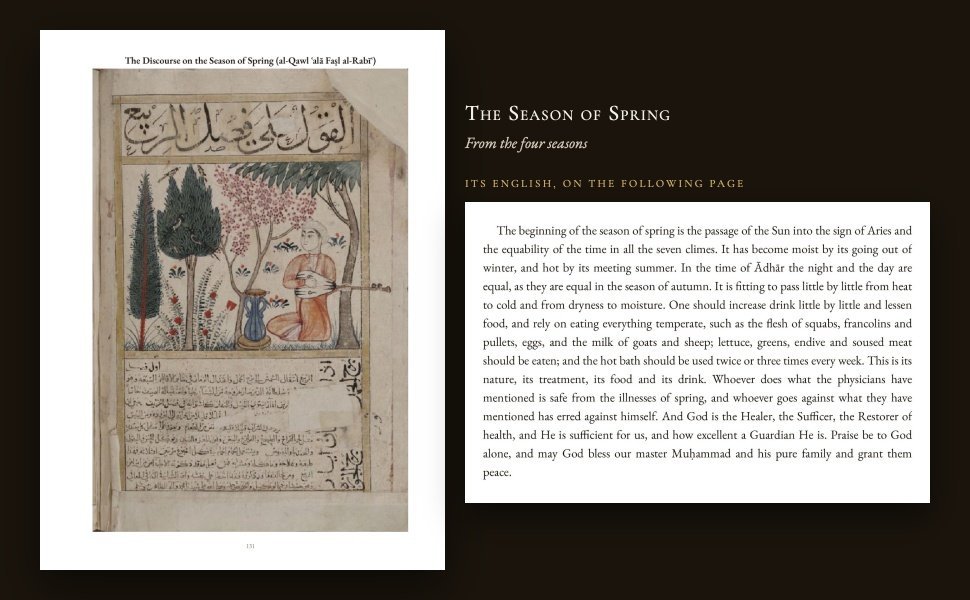
The first work, the Book of Wonders itself, includes the seven climes and the four seasons. Shown here are the leaf of the season of spring, printed whole, and the English of its text from the page that follows.
The Kings of the Jinn, Each Painted with His Followers and His Talismans
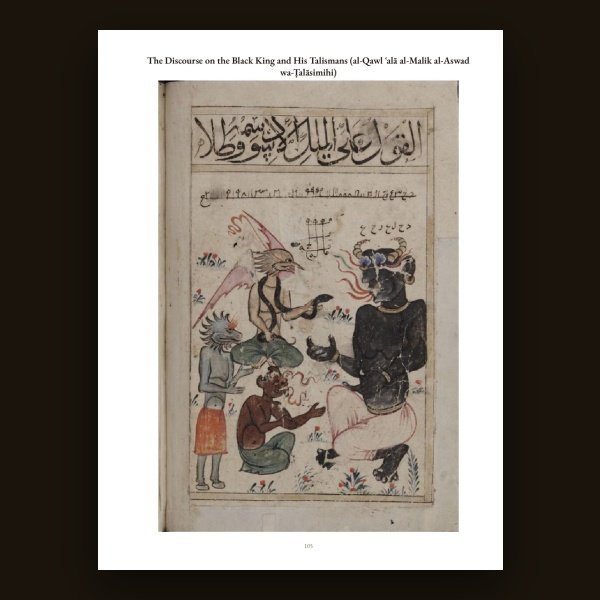
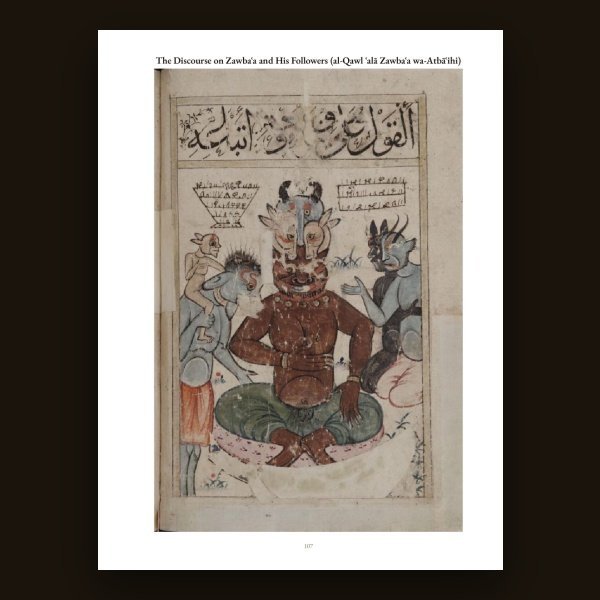
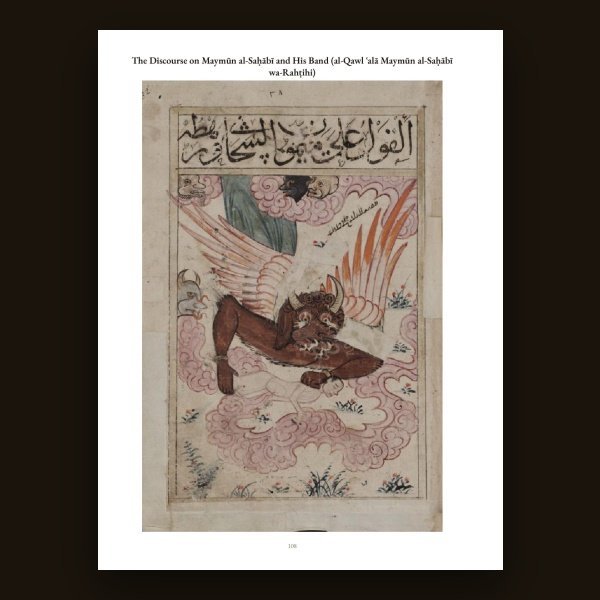
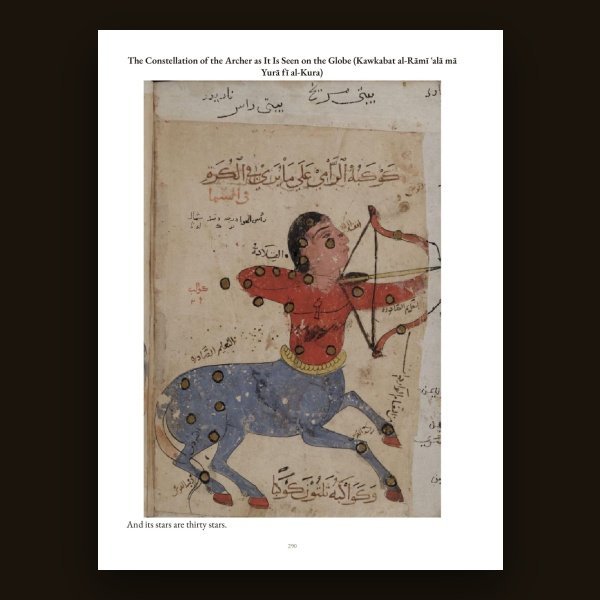
Constellations, the Moon, and the Omens of the Prophets
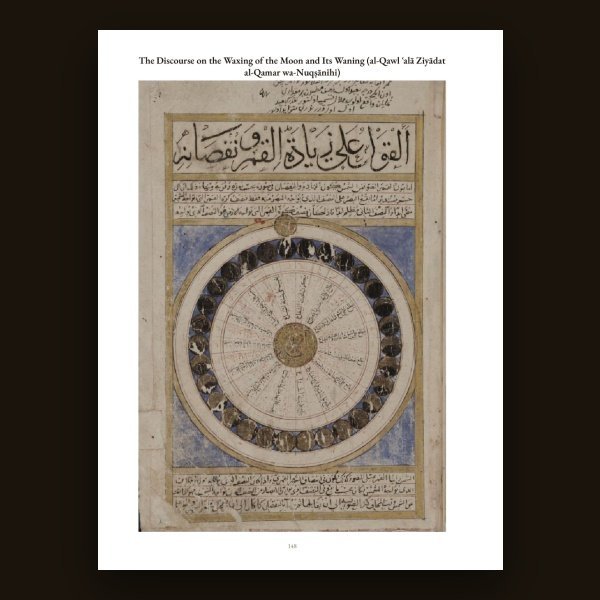
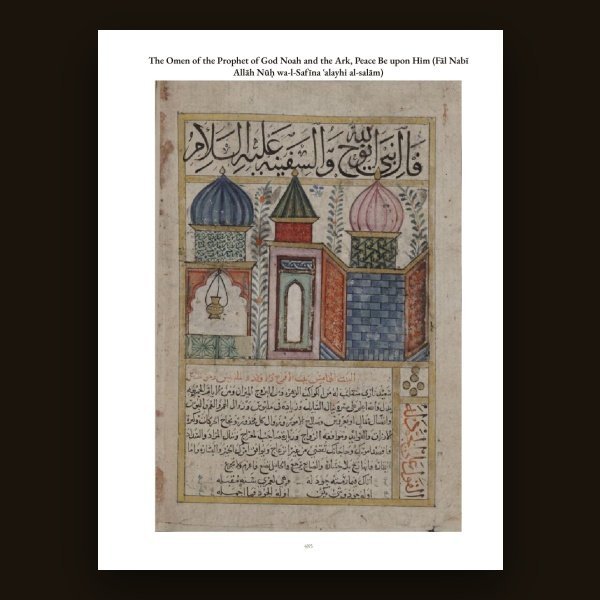
The Book of Wonders in English
Kitab al-Bulhan is the first complete English translation of Kitāb al-Bulhān, The Book of Wonders. Its author names himself in his preface as ʿAbd al-Ḥasan ibn Aḥmad ibn ʿAlī ibn al-Ḥasan al-Iṣfahānī, and the title page gives the book as attributed to him. He says he drew it up “in painted designs and colored figures, which hold subtleties of earnest and jest and beneficial uses”, and the paintings carry as much of the book as its words do.
The first work and its paintings
The first work, the Book of Wonders itself, starts with the nativities ascribed to Abu Ma‘shar al-Balkhi, and moves on to the trades each planet governs, the spirits and the kings of the jinn, the marvels of distant lands, the seasons and the seven climes. It closes with long runs of elections and tables, a lot of casts in twenty-five answers, and the friendships and enmities of the planets.
Six shorter works
Bound with it are the twelve figures of the zodiac with the Giant and the River, drawn for the sky and for the globe; al-Durar wa-l-Yawaqit, a treatise on timekeeping by a compiler who names himself in his own preface, with its tables of stars and mansions; the Ja‘fari Lot, sixty-four omens each headed by three Arabic letters; the omens of twelve prophets, from Shu‘ayb and the sheep to Job; the omens of the letters from Alif to Ya; and the signs paired with their planets.
How this edition presents the book
Each painting, diagram or table that fills a leaf is printed whole on its own page, in color, and each table is printed twice, the leaf first and its English after. Charms and inscribed formulas stand in English, ALA-LC transliteration and the original Arabic script. Where a place in the source cannot be read it is left out of all three layers rather than guessed. The paperback has 532 pages at 8.5 by 11 inches and the hardcover 535 pages at 8.25 by 11 inches.
The book is published as a historical document of the Arabic sciences of the stars and of divination. It records what its author and his sources believed and practiced, and nothing in it is offered as instruction. It is the second volume of The Illustrated Arabic Islamicate Occult, after The Secret of the Covenants; for the other Arabic grimoires now in English, see the complete guide to Arabic occult manuscripts in English.
Kitab al-Bulhan: Frequently Asked Questions
What is Kitab al-Bulhan?
Who wrote Kitab al-Bulhan?
What do the paintings show?
Is the book a manual of divination?
How is the Arabic text presented?
Where can I buy Kitab al-Bulhan in English?
Follow the Translation
New essays on the Arabic occult tradition, manuscript discoveries, and translation notes.