There is a particular kind of desperation that every spiritual tradition must eventually address. Not the routine difficulty that steady faith can absorb, but the acute crisis — the moment when everything has been tried, every prayer has been offered, and the situation has not changed. The child will not come. The fever will not break. The debtor is at the door. The army is at the gates. What do you do when you have already done everything you know how to do?
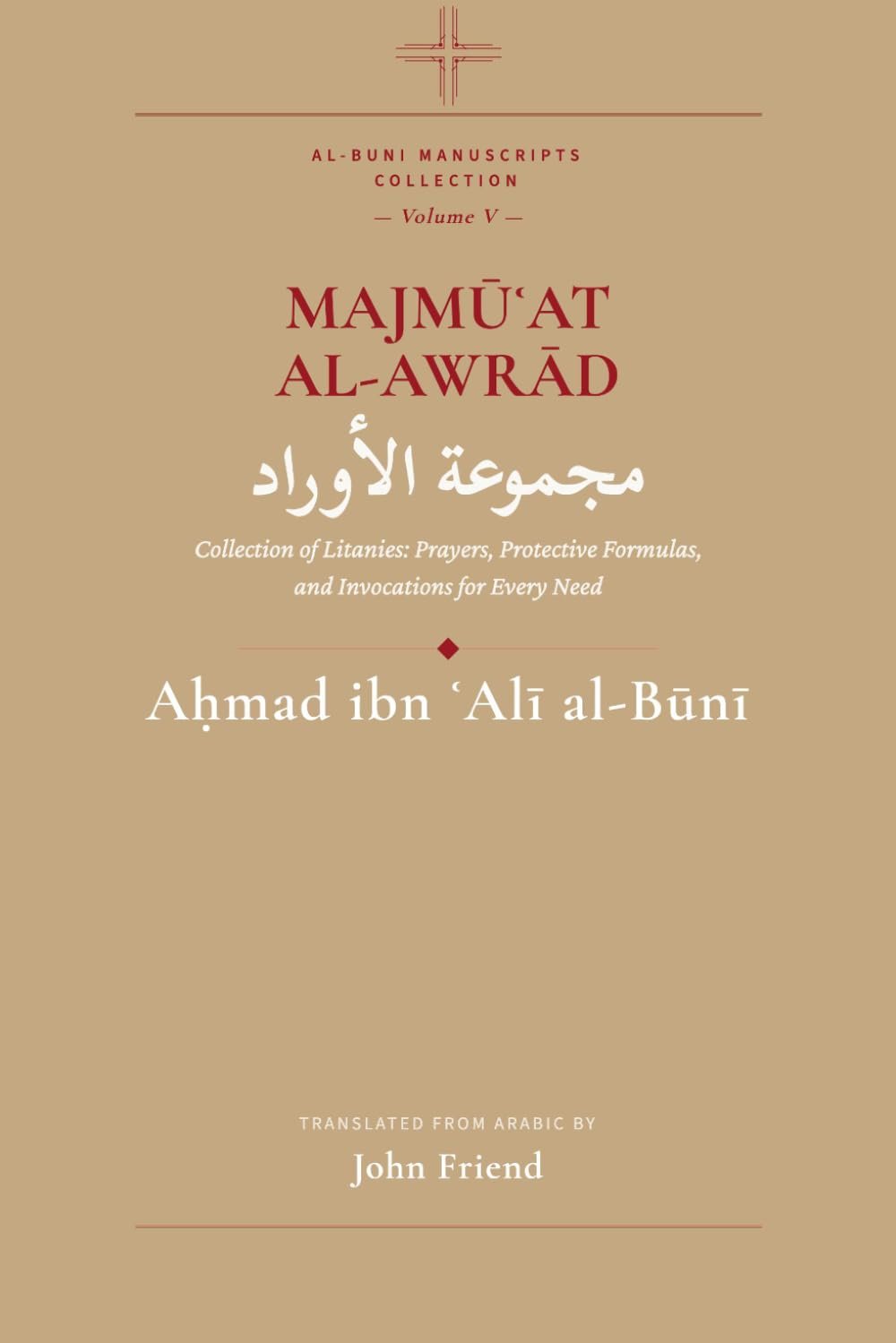
Al-Buni — Ahmad ibn ʿAlī al-Buni, who died around 622 AH / 1225 CE — had an answer. It was not vague. It was not “pray harder.” It was specific, structured, and systematic — a set of crisis-response protocols embedded within Volume V of the Al-Buni Manuscripts Collection, the Majmu’at al-Awrad (Collection of Litanies). To understand the scope of what al-Buni built, start with the foundational overview of his corpus. While the first article on this volume examined its prayers for plague and childbirth, this article focuses on a different dimension: the chapters al-Buni dedicated to spiritual emergency — when you are desperate and nothing else works.
The Architecture of Urgency
The 17 chapters of the Majmu’at al-Awrad are not randomly assembled. They follow a deliberate progression from practical protection through sustained devotion to crisis response. The crisis chapters — concentrated in the second half of the volume — represent the escalation protocols of a system designed to handle increasing levels of spiritual emergency.
Chapter 10: Prayer When in Distress is the most direct of these. Its very title — du’a ’ind al-karb — uses the Arabic word karb, which does not mean ordinary difficulty. It means constriction, anguish, the tightening of the chest that comes with overwhelming distress. This is the prayer for the moment when breathing itself feels like an act of will.
Al-Buni does not offer general consolation here. The chapter provides specific formulations — particular divine names arranged in particular sequences, recited particular numbers of times. In the tradition of Islamic prayer science, the number of recitations is never arbitrary. Each name carries a numerical value in the abjad system, and the number of repetitions is calibrated to that value. The practitioner is not simply repeating words. They are constructing a numerical-spiritual architecture designed to create a specific effect.
The Adjuration for Swift Response
Chapter 14: Adjuration for Swift Response (’azimah li-sur’at al-ijabah) introduces a more forceful register. The Arabic word ’azimah — adjuration — carries a weight that “prayer” does not. An adjuration is a solemn charge, a binding invocation, a calling-upon that presumes authority. In the Islamic magical tradition, ’azimah is the term used for conjurations of spiritual beings, for commands given in the name of God to forces that must obey. The genre of formal adjurations reaches its most dramatic form in the adjuration of the Red King, al-Ahmar.
That al-Buni uses this term in a devotional manual is significant. He is not asking. He is adjuring. The chapter title itself claims that this formula produces swift response — not eventual response, not response in God’s own time, but rapid, tangible answer. This is the language of operative magic within the framework of orthodox devotion, and it illustrates precisely why al-Buni’s work has always been controversial.
In many Arabic-speaking communities, popular belief holds that al-Buni’s adjurations work — that they compel response from the spiritual world in ways that ordinary prayer does not. This belief is precisely what makes his texts both sought after and feared. The adjuration for swift response is, in the popular imagination, the prayer you turn to when God seems silent — and many believe that such a prayer carries risks. The spiritual world, in this tradition, does not appreciate being adjured. What comes swiftly may not come gently.
Sura Ya Sin and al-Fath: The Quranic Engine
Before the crisis chapters, al-Buni lays the Quranic foundation that powers them.
Chapter 3: The Meccan Sura Ya Sin, Eighty-Three Verses and Chapter 4: The Medinan Sura al-Fath, Twenty-Nine Verses assign these two suras a central role in the devotional program. Sura Ya Sin (Chapter 36 of the Quran) is described in hadith as the “heart of the Quran” and is recited in Islamic tradition for the dying, for the forgiveness of sins, and for the fulfillment of needs. Sura al-Fath (“The Victory,” Chapter 48) is recited for opening, success, and the overcoming of obstacles.
Al-Buni does not merely recommend reading these suras. He integrates them into a system. Chapter 5: Noble Recitations and Prayer for Unveiling follows the Quranic chapters, suggesting that the suras function as preparation for what comes next — a “prayer for unveiling” (du’a al-kashf) that removes the veil between the practitioner and the spiritual reality behind their situation. You read Ya Sin and al-Fath not for comfort but to open a channel. Then you pray for unveiling. Then you enter the crisis protocols.
This is architecture, not accident. Al-Buni was constructing a graduated system where each stage prepares for the next.
The Wird: Daily Practice as Emergency Preparation
Chapter 6: Intention for the Wird and Chapter 7: Reciting the Awrad address the daily litany — the wird — that forms the backbone of Sufi devotional discipline. In Sufi orders, the wird is assigned by a shaykh (spiritual master) and consists of a structured sequence of Quranic recitations, divine name invocations, and prayers performed at regular intervals, typically after the five daily prayers or at specific times of night.
Al-Buni’s placement of these chapters before the crisis protocols is deliberate. The wird is not itself an emergency practice. It is the training that makes emergency practice effective. A practitioner who has maintained a daily wird for months or years has, in al-Buni’s framework, built the spiritual capacity necessary to wield the more powerful formulas described in later chapters. The adjuration for swift response is not meant for someone who picked up the book for the first time in a moment of panic. It is meant for someone who has done the work.
This point is often lost in popular discussions of al-Buni’s texts, which tend to extract individual formulas from their systematic context. The fear surrounding al-Buni’s work — the belief that his texts are dangerous to the unprepared — may derive precisely from this dynamic. A detailed history of how these texts were suppressed is traced in the account of the magic book that was banned and burned. The formulas are designed to operate within a sustained devotional practice. Used outside that context, popular tradition warns, they can produce unpredictable results.
Transforming the State: The Most Ambitious Operation
Chapter 12: Invocation Through the Divine Names and for Transforming the State is the most ambitious chapter in the collection. The Arabic phrase tahwil al-hal — transforming the state — has precise meaning in Sufi vocabulary. The hal (state) is a temporary spiritual condition that descends upon the seeker, as distinct from the maqam (station) which is a permanent attainment. To “transform the state” is to move from one condition to another — from constriction to expansion, from darkness to light, from despair to hope.
But in the practical context of the Majmu’at al-Awrad, tahwil al-hal also carries a worldly meaning: changing one’s circumstances. A person in poverty seeks wealth. A person in illness seeks health. A person in prison seeks freedom. Al-Buni’s chapter addresses both dimensions simultaneously — the spiritual transformation that enables worldly transformation, and the invocation of specific divine names calibrated to produce specific changes.
This dual operation — inner and outer change pursued simultaneously through the same formula — is characteristic of al-Buni’s entire approach. He never separates spiritual attainment from material result. The divine names are not metaphors. They are forces. To invoke al-Muqit (the Sustainer) is not merely to meditate on divine sustenance but to activate sustenance in your life. This is the position that made al-Buni’s works so controversial — see why people still fear reading them today. To invoke al-Fattah (the Opener) is not merely to contemplate divine opening but to open doors that have been closed.
The Closing Invocation and the Framework of Praise
Chapter 8: Invocation of Forgiveness and Divine Majesty, Chapter 9: Praise of the Beautiful, Exalted One, Chapter 13: The Closing Invocation, and Chapter 15: Noble Blessings provide the devotional framework within which the crisis protocols operate. Forgiveness precedes petition — a practitioner must clear their spiritual account before making demands. Praise establishes the relationship between the one who asks and the One who provides. The closing invocation seals the practice, and the noble blessings (salawat) upon the Prophet Muhammad serve as the traditional Islamic mechanism for ensuring that prayers are heard.
This framework reveals that the Majmu’at al-Awrad is not a collection of disconnected formulas. It is a complete devotional system — a liturgy in the proper sense of the word — that moves from preparation through Quranic recitation, from daily practice through crisis response, and from petition through closing and blessing. Al-Buni designed it to function as a whole.
The Legacy of Spiritual Emergency
Al-Buni’s emergency prayers continue to circulate today. In North Africa, West Africa, South Asia, and Southeast Asia, practitioners still use formulas from the Majmu’at al-Awrad — or texts in the same tradition — when facing crises that ordinary means cannot resolve. The wird traditions of the major Sufi orders all draw on the same reservoir of divine name invocation and Quranic recitation that al-Buni systematized.
What makes this volume distinctive is its honesty about the human situation it addresses. These are not prayers for the spiritually accomplished. They are prayers for the desperate. The chapter titles alone — “When in Distress,” “Adjuration for Swift Response,” “Transforming the State” — acknowledge that faith alone may not be enough, that some situations require escalation, and that the Islamic tradition contains within itself the tools for that escalation.
Whether one views these tools as genuinely operative, psychologically powerful, or communally sustaining, their persistence across eight centuries suggests that they address something real in the human experience of crisis. Al-Buni wrote for people at the end of their rope. That rope, it turns out, is longer than most people think.
The Al-Buni Manuscripts Collection, Volume V is available in paperback from John Friend Publishing. The complete Majmu’at al-Awrad with facing Arabic text, English translation, and scholarly annotations.